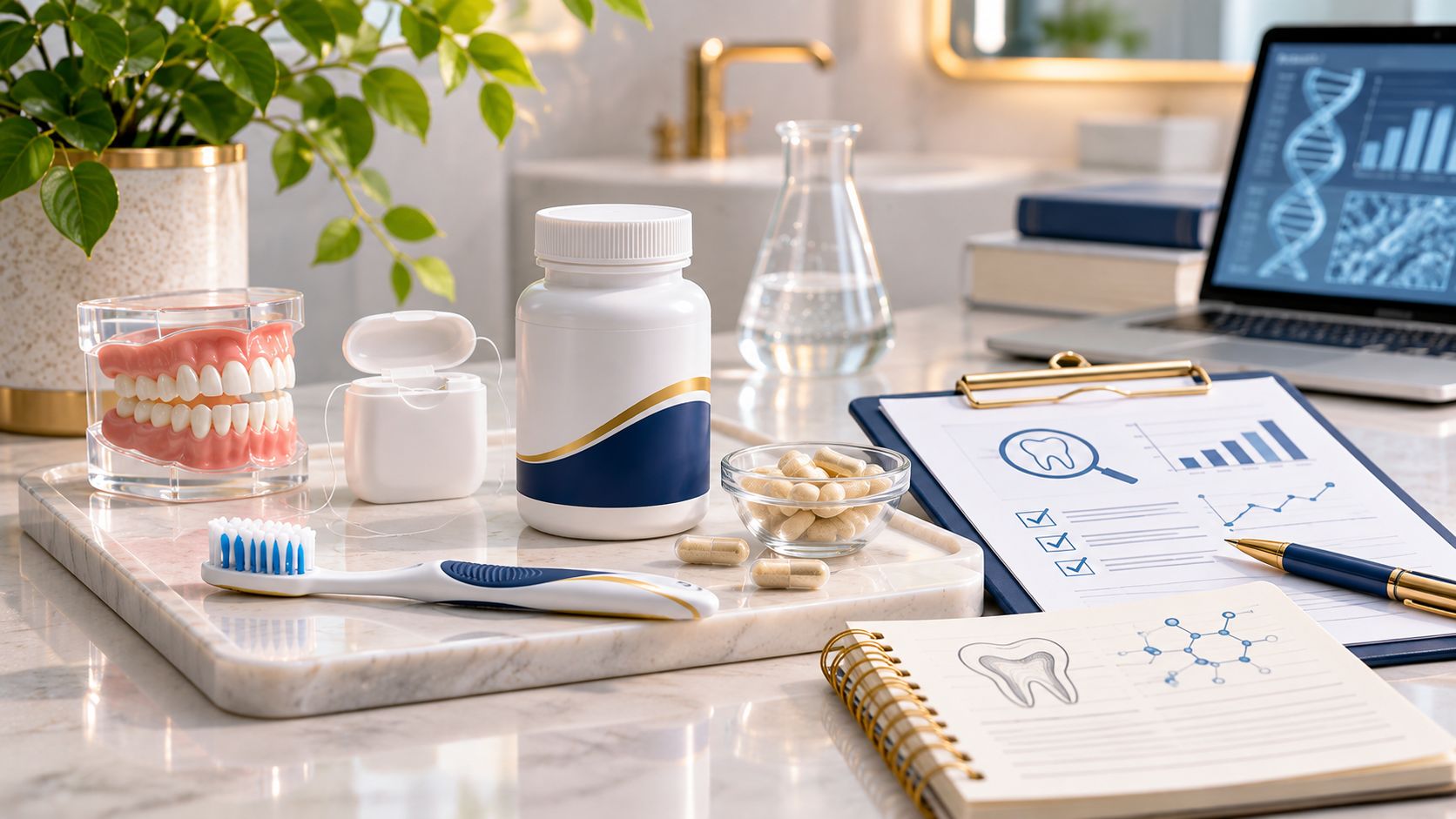
Interest in the oral microbiome and dietary supplements is understandable. Research into microorganisms, nutrients, and oral health is active, but a product category is not a treatment plan. Evidence must be evaluated for the specific ingredient, formulation, dose, population, and outcome being claimed.
What counts as an oral-health supplement?
Products may contain vitamins, minerals, botanical ingredients, probiotics, or combinations of these. They are different from fluoride toothpaste, interdental cleaning tools, prescription medicines, and dental treatments. In the United States, many supplements are marketed without premarket FDA approval for effectiveness.
What is the oral microbiome?
The mouth contains communities of microorganisms. Researchers study how these communities interact with diet, saliva, teeth, gums, and disease. That scientific interest does not mean that changing the microbiome with any commercially available product will produce a proven oral-health outcome.
What about probiotics?
Probiotics are live microorganisms intended to provide a health benefit. The National Center for Complementary and Integrative Health notes that different types may have different effects; an effect observed for one strain does not automatically apply to another. Research results from one product or condition should not be generalized to all probiotic supplements or to dental disease.
Nutrients and oral health
A balanced diet supports general health. Nutrient deficiencies can matter clinically, but taking a supplement without identifying a need is not the same as preventing or treating cavities, gingivitis, or periodontal disease. If you have dietary restrictions, medical conditions, pregnancy, or take medicines, discuss supplements with an appropriate clinician.
Evidence has limits
- Small or short studies may not answer whether a result lasts or applies broadly.
- Different product formulas can make comparisons difficult.
- Marketing language may go beyond the outcomes studied.
- Supplements do not remove plaque, repair a cavity, or replace an exam for symptoms.
Safety comes first
“Natural” does not automatically mean safe for everyone. Ingredients can interact with medicines, affect existing conditions, or be inappropriate for children, pregnancy, or people with immune-system concerns. Read labels, review warnings, and seek professional guidance when needed.
How to evaluate product information
Look for clear ingredients, realistic claims, safety information, and transparent seller details. If you would like to compare educational product information without assuming clinical benefit, explore our health and wellness products section. No product in that section replaces brushing with fluoride toothpaste, interdental cleaning, or professional dental care.
Frequently asked questions
Can a supplement replace a dental treatment?
No. Pain, swelling, bleeding, a cavity, or a suspected gum problem need appropriate professional evaluation.
Are probiotics proven for every oral-health goal?
No. Effects can depend on the specific microorganism, product, and outcome studied. Evidence is not interchangeable across products.
Should I start a supplement for dry mouth or bleeding gums?
Those symptoms can have several causes. Seek an assessment rather than relying on a supplement alone.
Conclusion
Science on supplements and the microbiome is evolving. The reliable foundation remains daily plaque control, fluoride toothpaste, appropriate interdental cleaning, a balanced diet, and professional care tailored to your needs.
Dr. Fabrício Barbosa Costa
Brazilian Dentist — CRO-SP 107373. Learn more about the dentist and the practice.