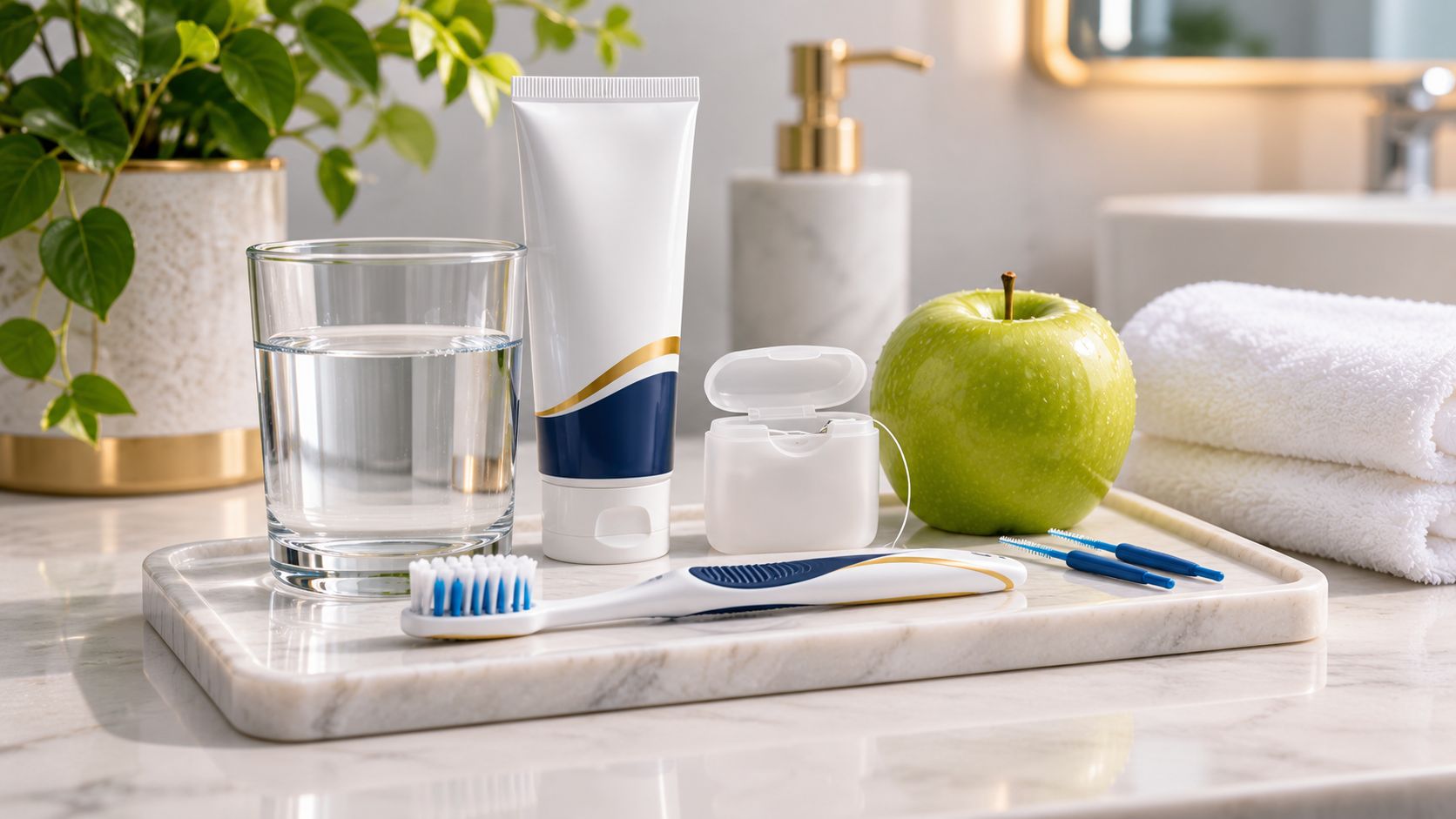
Oral health is not built around one product or one perfect technique. It is the result of repeatable habits, sensible choices, and professional care that fits your individual needs. The following tips summarize established guidance from the American Dental Association (ADA) and the National Institute of Dental and Craniofacial Research (NIDCR).
1. Brush twice a day with fluoride toothpaste
Brush for about two minutes, reaching the outside, inside, and chewing surfaces of every tooth. Fluoride toothpaste helps protect enamel from tooth decay. Use a gentle technique rather than hard scrubbing, which can irritate gums or wear tooth surfaces over time.
2. Clean between teeth every day
A toothbrush does not fully reach every contact area. Floss, interdental brushes, floss holders, or other appropriate tools may help remove plaque between teeth. The most suitable method depends on your mouth, dexterity, restorations, and what you can use consistently.
3. Pay attention to your gumline
Angle bristles gently toward the gumline and notice changes such as persistent bleeding, swelling, tenderness, or recession. These signs deserve a dental assessment rather than self-diagnosis.
4. Limit frequent sugary drinks and snacks
How often teeth are exposed to sugar matters. Choosing water more often and limiting frequent sweet drinks or snacks can support a lower-caries routine. A balanced diet also supports overall health.
5. Clean your tongue as part of your routine
Gentle tongue cleaning can be included when brushing. It is not a substitute for brushing teeth or interdental cleaning, but it can be a practical part of daily hygiene.
6. Replace worn toothbrushes
Frayed bristles are less effective at reaching surfaces. Replace your toothbrush or brush head when bristles look worn, and follow manufacturer guidance for powered-brush heads.
7. Take dry mouth seriously
Dry mouth can be related to medicines, health conditions, hydration, or other factors. It may increase the chance of tooth decay, so discuss persistent symptoms with a dental or medical professional instead of relying only on over-the-counter products.
8. Avoid tobacco in every form
Tobacco use affects oral and general health. If you use tobacco, a health professional can help identify appropriate support for reducing or stopping use.
9. Choose products thoughtfully
Look for products that fit your needs and use them as directed. Product claims should not replace fluoride toothpaste, interdental cleaning, or professional evaluation. To compare educational information about appropriate options, explore our health and wellness products section.
10. Schedule preventive care based on your needs
There is no single visit interval that fits every person. Risk factors, symptoms, past dental history, and current findings help a dental professional recommend an appropriate recall plan.
Frequently asked questions
Is brushing harder better?
No. A gentle, thorough technique is preferable to aggressive scrubbing. Ask a dentist or hygienist to review your technique if you are unsure.
Can mouthwash replace brushing or interdental cleaning?
No. Mouthwash may have a role for some people, but it does not replace mechanical plaque removal with brushing and cleaning between teeth.
When should I seek care sooner?
Seek professional advice for persistent pain, swelling, bleeding, sores that do not heal, trauma, or a loose tooth.
Conclusion
Start with a routine you can repeat: fluoride toothpaste, daily cleaning between teeth, thoughtful food and drink choices, and individualized preventive visits. Small habits become more useful when they are consistent.
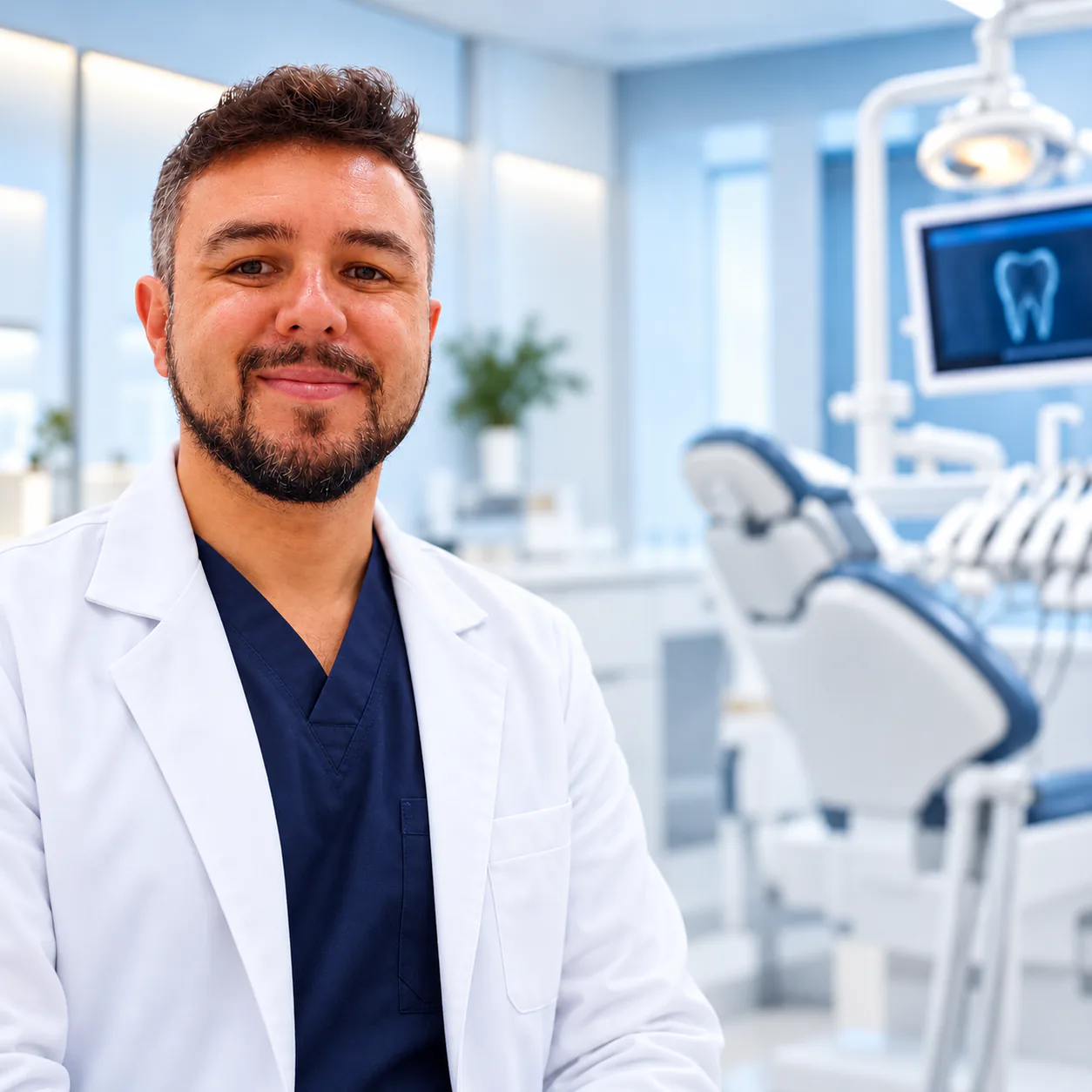
Dr. Fabrício Barbosa Costa
Brazilian Dentist — CRO-SP 107373. Learn more about the dentist and the practice.